Wizard® Genomic DNA Purification Kit
Manual, Solution-Based DNA Extraction Method
- Salting-out approach: 60-minute, scalable protocol
- No chaotropic salts, silica membranes, or organic solvents are required, with minimal hazardous reagent handling
- Preserves high-molecular-weight DNA integrity, which is important for applications that require intact, nonsheared DNA
- Compatible with a wide variety of sample types and applications
- Kit size based on number of isolations from whole blood; other sample types may vary

Catalog Number:
Size
Catalog Number: A1120
Catalog Number: A1125
Catalog Number: A1620
What Is the Salting-out Method for Genomic DNA Extraction?
Salting out is a solution-based DNA purification strategy in which high salt concentrations reduce protein solubility, causing them to precipitate out of solution while genomic DNA remains dissolved. The clarified DNA-containing supernatant is then recovered by alcohol precipitation. No silica columns or chaotropic reagents are required.
Salting out exploits the differential solubility of proteins and nucleic acids under high ionic strength conditions. At elevated salt concentrations—typically using concentrated sodium chloride (NaCl)—the ions compete with protein molecules for hydration by water, reducing the solvation shell around hydrophobic protein regions. This causes proteins to aggregate and precipitate as an insoluble pellet during centrifugation.
DNA, by contrast, remains soluble under these high-salt conditions because of its hydrophilic phosphate backbone. The result is a clear supernatant containing purified genomic DNA, free from the bulk of cellular proteins. The DNA is then concentrated and desalted by precipitation with isopropanol or ethanol, washed with 70% ethanol to remove residual salt, and resuspended in an aqueous rehydration buffer.
Why salting out preserves high-molecular-weight DNA
A key advantage of the salting-out approach over silica spin-column methods is the gentler handling of DNA. Column-based methods rely on vigorous mixing, centrifugation, and elution steps that can shear large DNA molecules. The Wizard® Genomic Kit’s solution-based protocol minimizes mechanical disruption, preserving fragments of high molecular weight—important for Southern blotting and restriction mapping where intact DNA is required.
The Wizard® Genomic DNA Purification Kit is based on the salting-out procedure originally described by Miller, Dykes and Polesky (1988) for extraction of DNA from human nucleated cells.
How Does the Wizard® Genomic DNA Purification Kit Work?
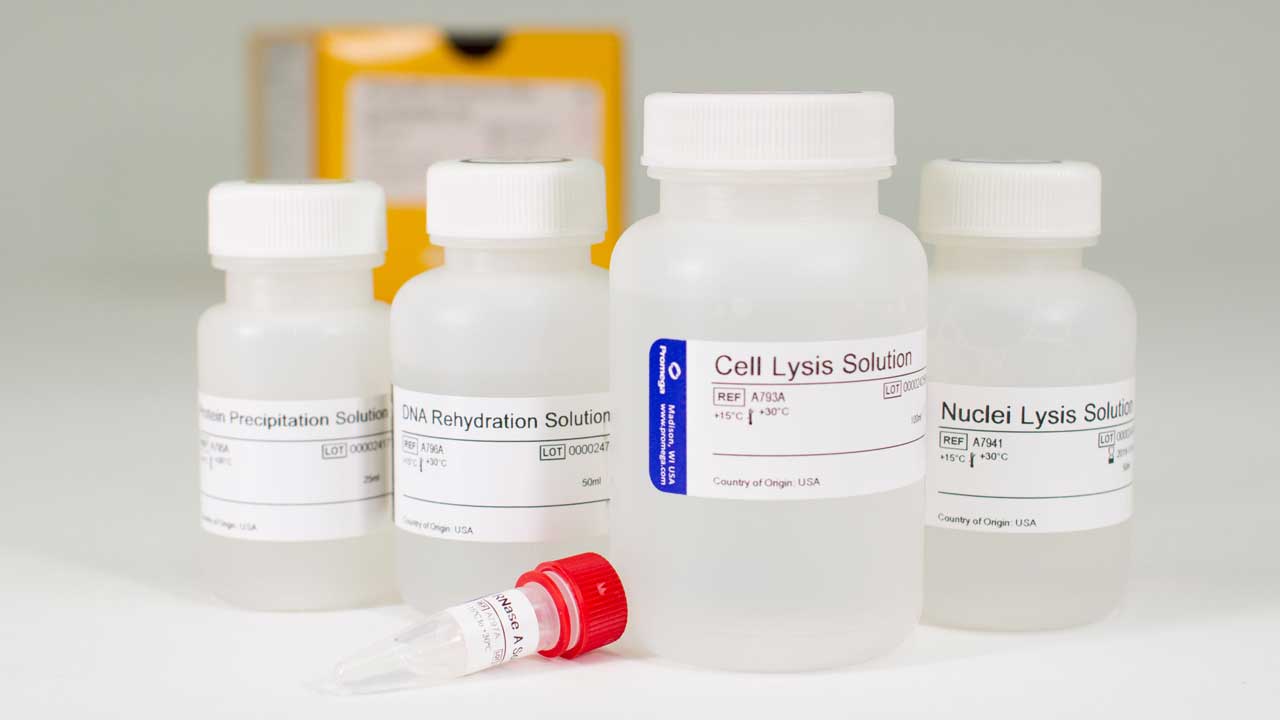
The Wizard® Genomic DNA Purification Kit includes four core reagents—Cell Lysis Solution, Nuclei Lysis Solution, Protein Precipitation Solution, and DNA Rehydration Solution—plus optional RNase A Solution. Together, they are used to execute the following workflow:
- Cell lysis
- RNase digestion (optional for blood; required for other sample types)
- Protein precipitation
- DNA precipitation and rehydration
RNase A treatment: optional or required by sample type
RNase A treatment removes RNA co-purified during cell lysis. Whether it is required depends on the sample type and downstream application.
| Sample Type | RNase Treatment | Notes |
|---|---|---|
| Human whole blood (all volumes) | Optional | Not needed for most downstream applications |
| Mouse whole blood | Optional | — |
| Cell lines (K562, COS, NIH3T3, PC12, CHO) | Required | All cell line protocols require RNase step |
| Animal tissue (mouse liver, tail) | Required (liver); Optional (tail) | See Technical Manual #TM050 |
| Insect cells (Sf9) | Required | — |
| Plant tissue (tomato leaf) | Required | — |
| Gram-negative and Gram-positive bacteria | Required | RNase added after 80°C lysis step |
| Yeast (S. cerevisiae) | Required | RNase added after DNA precipitation step |
How Much Genomic DNA Does the Kit Yield?
DNA yield depends on sample type and the quantity of cells present. For human whole blood, typical yields are 5–15μg from 300μl, 25–50μg from 1ml, and 250–500μg from 10ml. Yields for other sample types vary by species and starting material; representative values are listed below.
The following yield data represent typical results using the standard protocols provided. Actual yields will vary depending on sample quality, storage conditions, and cell count.
| Species/Material | Starting Amount | Typical DNA Yield | RNase Required |
|---|---|---|---|
| Human Whole Blood | 300μl | 5–15μg | Optional |
| 1.0ml | 25–50μg | Optional | |
| 10.0ml | 250–500μg | Optional | |
| Human Whole Blood (96-well) | 50μl/well | 0.2–0.7μg | Optional |
| Mouse Whole Blood (EDTA-treated) | 300μl | 6μg | Optional |
| Mouse Whole Blood (heparin-treated) | 300μl | 6–7μg | Optional |
| K562 (human cell line) | 3 × 10⁶ cells | 15–30μg | Required |
| COS (African green monkey) | 1.5 × 10⁶ cells | 10μg | Required |
| NIH3T3 (mouse) | 2.25 × 10⁶ cells | 9.5–12.5μg | Required |
| CHO (hamster) | 1–2 × 10⁶ cells | 6–7μg | Required |
| Mouse Liver | 11mg | 15–20μg | Required |
| Mouse Tail | 0.5–1.0cm | 10–30μg | Optional |
| Sf9 Insect Cells | 5 × 10⁶ cells | 16μg | Required |
| Tomato Leaf | 40mg | 7–12μg | Required |
| E. coli JM109 | 1ml overnight culture | 20μg | Required |
| 5ml overnight culture | 75–100μg | Required | |
| Staphylococcus epidermis | 1ml overnight culture | 6–13μg | Required |
| Saccharomyces cerevisiae | 1ml overnight culture | 4.5–6.5μg | Required |
Overnight bacterial and yeast cultures are approximately 2 × 10⁹ cells/ml and 1.9 × 10⁸ cells/ml respectively.
How Does Solution-Based Extraction Compare to Silica Spin-Column DNA Purification?
Solution-based salting-out uses salt to selectively precipitate proteins while DNA stays in solution, avoiding silica membranes and chaotropic reagents. Silica spin-column methods adsorb DNA onto a membrane or matrix under chaotropic conditions and elute it in a small volume. The two approaches differ in DNA fragment size preservation, reagent requirements and workflow tradeoffs.
| Feature | Solution-Based Salting Out (Wizard® Genomic) | Silica Spin-Column Methods |
|---|---|---|
| Mechanism | Salt precipitation of proteins; alcohol precipitation of DNA | Adsorption of DNA to silica membrane under chaotropic conditions |
| Chaotropic reagents | Not required | Required (guanidinium salts) |
| DNA fragment size | High-molecular-weight DNA preserved with gentle handling | Mechanical steps can introduce shearing |
| Elution volume | Flexible; resuspend in desired volume | Small, fixed elution volume; higher concentration |
| Protocol time | ~60 minutes | ~30–45 minutes (typically faster) |
| Hazardous reagents | Minimal; isopropanol and ethanol only | Guanidinium chloride or thiocyanate |
| Best for | Applications requiring HMW DNA (Southern blots, restriction mapping); broad sample variety | Routine PCR; concentrated DNA in small volumes |
For most standard PCR and sequencing applications, either method produces DNA of sufficient quality. The salting-out approach has an advantage when DNA molecular weight integrity is critical or when minimizing chaotropic reagent handling is a priority.
For What Applications Is the Wizard® Genomic DNA Purification Kit Suitable?
The Wizard® Genomic DNA Purification Kit provides a simple, solution-based method for isolation of DNA from white blood cells, tissue culture cells, animal tissue, plant tissue, yeast and Gram-positive and Gram-negative bacteria. DNA purified with the Wizard® Genomic DNA Purification Kit is suitable for PCR amplification, restriction endonuclease digestion, Southern blotting, dot and slot blot hybridizations, and other standard molecular biology techniques requiring high-quality, intact genomic DNA.
Learn more about our custom options for this product at: www.promega.com/custom/
Sample types processed with the Wizard® Genomic DNA Purification Kit
The following tables document validated sample types for the Wizard® Genomic DNA Purification Kit, with references to protocols in Technical Manual #TM050 and peer-reviewed publications demonstrating use with external samples. This is one of the most extensively validated genomic DNA extraction kits across species and sample types in the published literature.
| Sample Type | Promega | External | Comments |
|---|---|---|---|
| Human whole blood | Yes | Yes | Protocols are provided in the Wizard® Genomic DNA Purification Kit Technical Manual #TM050 for samples of up to 10ml blood or in 96-well plates (“Isolating Genomic DNA from Whole Blood” sections). The protocol works with the following anticoagulants: EDTA, heparin and citrate. Reference: Rizzo, W.B., Carney, G. and Lin, Z. (1999) Am. J. Hum. Genet. 65, 1547–60. PubMed ID 10577908 |
| Mouse whole blood | Yes | — | A protocol is provided in the Wizard® Genomic DNA Purification Kit Technical Manual #TM050. |
| Human peripheral blood mononuclear cells | — | Yes | Tan, A. et al. (2006) Clin. Chem. 52, 2250–7. PubMed ID 17040960 |
| Bovine whole blood | — | Yes | Walker, J.A. et al. (2003) Anal. Biochem. 316, 259–69. PubMed ID 12711348 |
| Horse whole blood | — | Yes | Walker, J.A. et al. (2003) Anal. Biochem. 316, 259–69. PubMed ID 12711348 |
| Sheep whole blood | — | Yes | Walker, J.A. et al. (2003) Anal. Biochem. 316, 259–69. PubMed ID 12711348 |
| Antelope whole blood | — | Yes | Walker, J.A. et al. (2003) Anal. Biochem. 316, 259–69. PubMed ID 12711348 |
| Dog whole blood | — | Yes | Walker, J.A. et al. (2003) Anal. Biochem. 316, 259–69. PubMed ID 12711348 |
| Cat whole blood | — | Yes | Walker, J.A. et al. (2003) Anal. Biochem. 316, 259–69. PubMed ID 12711348 |
| Rabbit whole blood | — | Yes | Walker, J.A. et al. (2003) Anal. Biochem. 316, 259–69. PubMed ID 12711348 |
| Sample Type | Promega | External | Comments |
|---|---|---|---|
| Mouse liver | Yes | Yes | Tissue needs to be homogenized prior to isolation. A protocol is provided in the Wizard® Genomic DNA Purification Kit Technical Manual #TM050, “Isolating Genomic DNA from Tissue Culture Cells and Animal Tissue” section. Reference: Barazzoni, R. et al. (2005) Endocrinology 146, 2098–106. PubMed ID 15618355. |
| Mouse tail | Yes | Yes | Tail needs to be treated with proteinase K before purification. A protocol is provided in the Wizard® Genomic DNA Purification Kit Technical Manual #TM050, “Isolating Genomic DNA from Tissue Culture Cells and Animal Tissue” section. Reference: Nielsen, J.V. et al. (2007) Development 134, 1133–40. PubMed ID 17301088. |
| Mouse brain | — | Yes | Sinz, E.H. et al. (1999) J. Clin. Invest. 104, 647–56. PubMed ID 10487779. |
| Mouse lymphoma | — | Yes | Yu, Z. et al. (2006) Cancer Res. 66, 755–62. PubMed ID 16424006. |
| Rat skeletal muscle, liver and heart | — | Yes | Barazzoni, R. et al. (2000) J. Biol. Chem. 275, 3343–7. PubMed ID 10652323. |
| Human bone marrow aspirate | — | Yes | Yu, Z. et al. (2006) Cancer Res. 66, 755–62. PubMed ID 16424006. |
| Human liver and testicle | — | Yes | Maduro, M.R. et al. (2003) Mol. Hum. Reprod. 9, 61–8. PubMed ID 12569174. |
| Human colon | — | Yes | Tost, J. et al. (2003) Nucleic Acids Res. 31, e50. PubMed ID 12711695. |
| Sample Type | Promega | External | Comments |
|---|---|---|---|
| Tomato leaf | Yes | — | Leaf needs to be frozen in liquid nitrogen and ground with a mortar and pestle prior to adding lysis buffer. A protocol is provided in the Wizard® Genomic DNA Purification Kit Technical Manual #TM050, “Isolating Genomic DNA from Plant Tissue” section. |
| Arabidopsis | — | Yes | Vorwerk, S. (2001) Wizard® Genomic DNA Purification Kit and the isolation of plant genomic DNA. eNotes |
| Maize | — | Yes | Vorwerk, S. (2001) Wizard® Genomic DNA Purification Kit and the isolation of plant genomic DNA. eNotes |
| Lemna minor (aquatic plant) | — | Yes | Stout, L.M. and Nüsslein, K. (2005) Appl. Environ. Microbiol. 71, 2484–92. PubMed ID 15870338. |
| Medicago truncatula | — | Yes | Total DNA was isolated from roots, which may include various mycorrhizal fungi. Kosuta, S. et al. (2003) Plant Physiol. 131, 952–62. PubMed ID 12644648. |
| Tetrahymena thermophila | — | Yes | Followed plant DNA protocol (“Isolating Genomic DNA from Plant Tissue”) but skipped freezing in liquid nitrogen and grinding with a mortar and pestle. Jacobs, M.E. et al. (2006) Eukaryot. Cell 5, 1990–2000. PubMed ID 17012537. |
| Sample Type | Promega | External | Comments |
|---|---|---|---|
| Drosophila D.Mel-2 embryonic cells | — | Yes | Roberti, M. et al. (2006) Nucleic Acids Res. 34, 2109–16. PubMed ID 16648357. |
| Mouse embryonic stem cells | — | Yes | Oka, M. et al. (2006) J. Biol. Chem. 281, 9901–8. PubMed ID 16439359. |
| Monkey primary fibroblasts, virus-infected | — | Yes | Cells were lysed using 300μl of Nuclei Lysis Solution with proteinase K and incubating overnight at 37°C. Mansfield, K.G. et al. (1999) J. Virol. 73, 10320–8. PubMed ID 10559350. |
| Vero cells infected with HSV-1 | — | Yes | Both viral and genomic DNA were isolated. Bower, J.R. et al. (1999) J. Virol. 73, 3843–53. PubMed ID 10196279. |
| CD45RA+ T cells from cord blood | — | Yes | Samples of 2–4 × 10⁶ cells were pelleted, washed with PBS, snap frozen in liquid nitrogen and frozen at −70°C prior to using the Wizard® Genomic DNA Purification Kit. Soares et al. (1998) J. Immunol. 161, 5909–17. PubMed ID 9834071. |
| Sample Type | Promega | External | Comments |
|---|---|---|---|
| Enterobacter cloacae | Yes | — | A protocol is provided in the Wizard® Genomic DNA Purification Kit Technical Manual #TM050, “Isolating Genomic DNA from Gram Positive and Gram Negative Bacteria” section. |
| Escherichia coli | Yes | Yes | A protocol is provided in the Wizard® Genomic DNA Purification Kit Technical Manual #TM050, “Isolating Genomic DNA from Gram Positive and Gram Negative Bacteria” section. Reference: Zheng, W. et al. (2001) EMBO J. 20, 1164–72. PubMed ID 11230139. |
| Nitrobacter winogradskyi | — | Yes | Starkenburg, S.R. et al. (2006) Appl. Environ. Microbiol. 72, 2050–63. PubMed ID 16517654. |
| Yersinia pestis | — | Yes | Flashner, Y. et al. (2004) Infect. Immun. 72, 908–15. PubMed ID 14742535. |
| Burkholderia species | — | Yes | Moore, R.A. et al. (2004) Infect. Immun. 72, 4172–87. PubMed ID 15213162. |
| Salmonella enterica | — | Yes | Nair, S. et al. (2004) J. Bacteriol. 186, 3214–23. PubMed ID 15126484. |
| Field bacteria samples, non-Agrobacterium | — | Yes | Weller, S.A. et al. (2004) Appl. Environ. Microbiol. 70, 2779–85. PubMed ID 15128532. |
| Haemophilus influenzae | — | Yes | Ottemann, K.M. and Lowenthal, A.C. (2002) Infect. Immun. 70, 1984–90. PubMed ID 11895962. |
| Bordetella bronchiseptica | — | Yes | Brockmeier, S.L. et al. (2002) Infect. Immun. 70, 481–90. PubMed ID 11796573. |
| Leptospira kirschneri | — | Yes | Matsunaga, J. et al. (2002) Infect. Immun. 70, 323–34. PubMed ID 11748198. |
| Klebsiella pneumoniae | — | Yes | Yigit, H. et al. (2001) Antimicrob. Agents Chemother. 45, 1151–61. PubMed ID 11257029. |
| Marine Geobacteraceae | — | Yes | Bacteria colonizing energy-harvesting anodes were scraped off, organically extracted and purified using the Wizard® Genomic DNA Purification Kit. Bond, D.R. et al. (2002) Science 295, 483–5. PubMed ID 11799240. |
| Serratia marcescens | — | Yes | Peccia, J. and Hernandez, M. (2001) Appl. Environ. Microbiol. 67, 4225–32. PubMed ID 11526027. |
| Borrelia burgdorferi | — | Yes | Chaconas, G. et al. (2001) EMBO J. 20, 3229–37. PubMed ID 11406599. |
| Campylobacter jejuni | — | Yes | Dorrell, N. et al. (2001) Genome Res. 11, 1706–15. PubMed ID 11591647. |
| Desulfovibrio desulfuricans | — | Yes | Rapp-Giles, B.J. et al. (2000) Appl. Environ. Microbiol. 66, 671–7. PubMed ID 10653734. |
| Vibrio cholerae | — | Yes | Stine, O.C. et al. (2000) Infect. Immun. 68, 7180–5. PubMed ID 11083852. |
| Vibrio harveyi | — | Yes | Zhou, W. et al. (1999) Biochemistry 38, 16246–52. PubMed ID 10587447. |
| Paracoccus denitrificans | — | Yes | Shearer, N. et al. (1999) J. Bacteriol. 181, 6907–13. PubMed ID 10559155. |
| Campylobacter species | — | Yes | Before genomic DNA isolation, the bacteria were washed in TE buffer and resuspended in 1ml of TE buffer at ~1 × 10⁹ cells/ml. Duim, B. et al. (1999) Appl. Environ. Microbiol. 65, 2369–75. PubMed ID 10347015. |
| Sphingomonas paucimobilis | — | Yes | Jiang, S.C. et al. (1998) Appl. Environ. Microbiol. 64, 535–42. PubMed ID 9464390. |
| Flavobacterium species | — | Yes | Jiang, S.C. et al. (1998) Appl. Environ. Microbiol. 64, 535–42. PubMed ID 9464390. |
| Sample Type | Promega | External | Comments |
|---|---|---|---|
| Bacillus anthracis | — | Yes | Pomerantsev, A.P. et al. (2006) Infect. Immun. 74, 682–93. PubMed ID 16369025. |
| Bacillus cereus | — | Yes | van Schaik, W. et al. (2004) J. Bacteriol. 186, 316–25. PubMed ID 14702299. |
| Bacillus subtilis | — | Yes | Ben-Yehuda, S. and Losick, R. (2002) Cell 109, 257–66. PubMed ID 12007411. |
| Staphylococcus, 12 strains | — | Yes | Li, Y. et al. (2003) J. Clin. Microbiol. 41, 3481–6. PubMed ID 12904342. |
| Lactobacillus acidophilus | — | Yes | Li, Y. et al. (2003) J. Clin. Microbiol. 41, 3481–6. PubMed ID 12904342. |
| Actinomyces naeslundii | — | Yes | Li, Y. et al. (2003) J. Clin. Microbiol. 41, 3481–6. PubMed ID 12904342. |
| Streptococcus pneumoniae | — | Yes | Brown, J.S. et al. (2002) Infect. Immun. 70, 4389–98. PubMed ID 12117949. |
| Sample Type | Promega | External | Comments |
|---|---|---|---|
| Methanococcus jannaschii | — | Yes | Löwe, J. and Amos, L.A. (1998) Nature 391, 203–6. PubMed ID 9428770. |
| Methanosarcina mazei | — | Yes | Lange, M. et al. (2000) Appl. Environ. Microbiol. 66, 1796–1800. PubMed ID 10788341. |
| Mycoplasma hyorhinis | — | Yes | Cells were collected and lysed in 1% sodium dodecyl sulfate (SDS), 45mM Tris (pH 8.0) and 9mM EDTA for 10 minutes at 50°C, then incubated for 10 minutes at 37°C. The Wizard® Genomic DNA Purification Kit was subsequently used for genomic DNA extraction. Citti, C. et al. (2000) J. Bacteriol. 182, 1356–63. PubMed ID 10671459. |
| Mycobacterium parafortuitum | — | Yes | Cells were treated with proteinase K and lysozyme for 1 hour, centrifuged and resuspended in Nuclei Lysis Solution. Glass beads were added, the glass bead-cell lysate shaken for 5 minutes, incubated at 65°C for 1 hour and the glass bead-lysate shaken again for 3 minutes. The protocol then followed the bacterial method of the Wizard® Genomic DNA Purification Kit (“Isolating Genomic DNA from Gram Positive and Gram Negative Bacteria”). Peccia, J. and Hernandez, M. (2001) Appl. Environ. Microbiol. 67, 4225–32. PubMed ID 11526027. |
| Intestinal microflora | — | Yes | Chicken intestines were removed and the contents of each segment (duodenum, jejunum, ileum, and cecum) were inverted into a sterile 15ml tube containing 9ml of sterile PBS. After adding 4mm glass beads, the samples were vortexed for 3 minutes, and the debris was removed by centrifuging at 700 × g for 1 minute. The supernatant was collected and centrifuged at 12,000 × g for 5 minutes. The pellet was washed twice with PBS and stored at −20°C until DNA extraction. This frozen pellet was resuspended in EDTA and treated with lysozyme (at a final concentration of 10mg/ml) for 45 minutes at 37°C. The bacterial genomic DNA was isolated with the Wizard® Genomic DNA Purification Kit. Amit-Romach, E., Sklan, D. and Uni, Z. (2004) Poult. Sci. 83, 1093–98. PubMed ID 15285498. |
| Sample Type | Promega | External | Comments |
|---|---|---|---|
| Candida species, various | — | Yes | Yeast cells were incubated for 1 hour at 37°C with 1M sorbitol, 0.1M EDTA, 0.1% (w/v) zymolyase-100T (Seikaguku Corp.), and 1% (v/v) 2-mercaptoethanol adjusted to pH 7.5. Chromosomal DNA was then isolated using the Wizard® Genomic DNA Purification Kit. Park, S. et al. (2000) J. Clin. Microbiol. 38, 2829–36. PubMed ID 10921935. |
| Sample Type | Promega | External | Comments |
|---|---|---|---|
| Aspergillus fumigatus | — | Yes | Cells were filtered through a 0.2μm SFCA filter, frozen on dry ice, then ground with a mortar and pestle. The ground cells were incubated in Nuclei Lysis Solution at 37°C for 1 hour before purifying with the Wizard® Genomic DNA Purification Kit, “Isolating Genomic DNA from Tissue Culture Cells and Animal Tissue” section. Burghoorn, H.P. et al. (2002) Antimicrob. Agents Chemother. 46, 615–24. PubMed ID 11850239. |
| Nectria haematococca | — | Yes | Mycelia were ground in liquid nitrogen and lyophilized before lysing in a modified lysis buffer consisting of 50mM Tris-HCl (pH 7.5), 50mM EDTA (pH 8.0), 3% SDS and 1% mercaptoethanol. Wu, Q. et al. (1998) Mol. Biol. Cell 9, 89–101. PubMed ID 9436993. |
| Pneumocystis carinii | — | Yes | Sputum samples were dispensed into ~1ml aliquots and centrifuged at 14,000 × g for 5–7 minutes. The cell pellet was resuspended in 1ml of phosphate-buffered saline (0.01M, pH 7.2) containing 1mM EDTA (PBS-EDTA), washed twice in PBS-EDTA, centrifuged and stored at −80°C for later DNA extraction. DNA was prepared using the Wizard® Genomic DNA Purification Kit, “Isolating Genomic DNA from Whole Blood” section. Beard, C.B. et al. (2000) Emerg. Infect. Dis. 6, 265–72. PubMed ID 10827116. |
| Sample Type | Promega | External | Comments |
|---|---|---|---|
| Drosophila, adult fly | — | Yes | To prepare genomic DNA from adult D. virilis and D. melanogaster, 100 adult flies were homogenized and the DNA purified using the Wizard® Genomic DNA Purification Kit. Hanrahan, C.J. et al. (2000) Genetics 155, 1149–60. PubMed ID 10880477. |
| Frog skin | — | Yes | Skin biopsies from Amphibiocystidium ranae (10μm sections) were deparaffinized twice in xylene and centrifuged at high speed. The tissue pellet was washed with 95% and 70% ethanol, then dried, and the genomic DNA was extracted using the Wizard® Genomic DNA Purification Kit. Pereira, C.N. et al. (2005) J. Clin. Microbiol. 43, 192–8. PubMed ID 15634971. |
| Cichlid fin and whole fish | — | Yes | Genomic DNA was isolated from 1–2 mm2 ethanol-preserved Neolamprologus pulcher finclip samples or whole offspring using the Wizard® Genomic DNA Isolation Kit, “Isolating Genomic DNA from Tissue Culture Cells and Animal Tissue” section, with small modifications (not listed). Heg, D. et al. (2006) Behav. Ecol. 17, 419–29. |
| Plasmodium vivax | — | Yes | Researchers used a modified animal tissue/tail snip protocol. Sawabe, T. and Ikeda, T. (2005) Wizard® Genomic DNA Purification Kit provides high-quality genomic DNA template for molecular phylogenetic studies on Copepod crustaceans. eNotes |
| Plasmodium vivax | — | Yes | To isolate the parasite from whole blood, a modified protocol was used.
(Personal communication) |
| Amoeba | — | Yes | Trophozoites of clone A of Entamoeba histolytica (strain HM1:IMSS) were “axenically cultured” in TYI-S33 medium. Trophozoites (3 × 10⁶) were processed as described in the Wizard® Genomic DNA Purification Kit Technical Manual #TM050, following the protocol for isolation of genomic DNA from tissue culture cells (“Isolating Genomic DNA from Tissue Culture Cells and Animal Tissue” section). DNA pellet was dissolved with 50μl of DNA rehydration solution and incubated overnight at 4°C. Yield: 2.5μg per 3 × 10⁶ trophozoites. Purity A260/280: 1.8. (Personal communication) |
Protocols
Complete Protocol
Quick Protocols
Frequently Asked Questions
What is the principle of salting-out DNA purification?
Salting out exploits the difference in solubility between proteins and DNA at high ionic strength. When concentrated NaCl (the Protein Precipitation Solution) is added to a cell lysate, it reduces water availability for protein hydration, causing proteins to aggregate and precipitate. DNA remains in solution due to its hydrophilic phosphate backbone. The proteins are pelleted by centrifugation, and DNA is recovered from the supernatant by isopropanol precipitation. This method was originally described by Miller, Dykes and Polesky (1988) Nucl. Acids Res. 16: 1215.
Why are red blood cells lysed first in whole-blood DNA extraction?
Red blood cells are anucleate—they contain no nucleus and therefore no genomic DNA. Lysing them selectively with Cell Lysis Solution removes the majority of cell volume before WBC lysis, concentrating the white blood cells that are the actual source of nuclear DNA. This makes the subsequent lysis and protein precipitation steps more efficient. The WBC pellet must be fully vortexed after RBC removal to ensure complete resuspension—incomplete resuspension is the most common cause of poor yield in blood protocols.
How does high salt precipitate proteins during salting-out extraction?
At high ionic strength, Na+ and Cl− ions from the Protein Precipitation Solution compete with protein molecules for hydration by surrounding water. This strips the hydration shell from protein surfaces, exposing hydrophobic regions that aggregate with other protein molecules. The resulting aggregates are insoluble and form a dark brown pellet during centrifugation. DNA, which has a strongly hydrophilic phosphate backbone, remains in solution under these same conditions.
What is the role of Cell Lysis Solution and Nuclei Lysis Solution?
Cell Lysis Solution is used exclusively in blood protocols to selectively lyse red blood cells, which are more osmotically fragile than white blood cells. It does not lyse white blood cells or their nuclei. Nuclei Lysis Solution is used in all protocols to disrupt white blood cell and nuclear membranes (or cell membranes in non-blood samples), releasing genomic DNA into solution. The solution should become viscous after addition, indicating DNA release. If cell clumps remain after mixing, incubation at 37°C is recommended until disrupted.
Why does the DNA pellet need to be washed with 70% ethanol?
The DNA pellet after isopropanol precipitation retains residual salts from the Protein Precipitation Solution. These salts can inhibit downstream enzymes including polymerases and restriction endonucleases. A wash with 70% ethanol removes salt without dissolving the DNA pellet. Complete removal of ethanol before resuspension is important—residual ethanol can inhibit PCR. The DNA pellet is very loose at the wash step; use extreme care when aspirating to avoid pellet loss.
Why might no protein pellet be visible after centrifugation?
Two causes are identified in Technical Manual #TM050, Section 4: (1) The sample was not cooled to room temperature before adding Protein Precipitation Solution. The sample must be at room temperature for at least 5 minutes, or chilled on ice for 5 minutes, before proceeding. (2) The Protein Precipitation Solution was not thoroughly mixed with the nuclear lysate. Always vortex vigorously for 10–20 seconds to ensure complete mixing. If no pellet appears after these steps, centrifuge again for 3 minutes at 13,000–16,000 × g.
What causes a DNA pellet that is difficult to dissolve?
According to Technical Manual #TM050, Section 4, a pellet that is difficult to dissolve is most commonly caused by overdrying. Air-dry the pellet for only 10–15 minutes—do not leave it to dry for extended periods. If the pellet is already overdried, rehydrate by incubating at 65°C for 1 hour with periodic gentle mixing, then leave the sample at room temperature or 4°C overnight. Do not leave the DNA at 65°C overnight. Incomplete mixing during the rehydration step can also produce a pellet that appears undissolved; mix periodically throughout the rehydration incubation.
Can frozen blood samples be used with the Wizard® Genomic Kit?
Yes, but yields may be lower than from fresh blood. When using frozen blood, repeat the Cell Lysis Solution incubation and centrifugation steps until the pellet appears white, as additional Cell Lysis Solution may be needed to fully remove lysed RBCs. For optimal results, use fresh blood or samples stored at 2–8°C for no more than 5 days. DNA from blood samples stored for more than 5 days at 2–8°C may show reduced yield.
What should I do if blood is clotted?
Clotted blood cannot be processed with this kit. Clotting indicates the sample was stored improperly, the blood was not thoroughly mixed with anticoagulant at collection, or the incorrect tube type was used. Discard the clotted sample and draw a new blood sample using EDTA-, heparin-, or citrate-treated anticoagulant tubes. Blood must be collected in anticoagulant tubes; clot-activator (gold-top SST) tubes are not compatible with this protocol.
How is DNA concentration and purity assessed after Wizard® Genomic extraction?
DNA concentration and purity are typically assessed by spectrophotometry. An A260/A280 ratio between 1.7 and 1.9 indicates acceptably pure DNA; values below 1.7 suggest protein contamination, and values above 1.9 may indicate RNA contamination (if RNase step was skipped). An A260/A230 ratio above 1.8 indicates low salt or carbohydrate contamination. For precise quantification of low-concentration samples, fluorometric methods (Qubit®, PicoGreen®) are more accurate than UV absorbance.
How much genomic DNA can be expected from a 300μl whole-blood sample?
The typical yield from 300μl of human whole blood is 5–15μg (Technical Manual #TM050). Yield depends primarily on the white blood cell count of the donor sample. Human adult blood contains approximately 4,000–11,000 WBCs per microliter; lymphopenic samples will produce lower yields. Resuspension in 100μl DNA Rehydration Solution gives a typical working concentration of approximately 50–150ng/μl. Yields from mouse blood (300μl) are typically ~6μg for both EDTA- and heparin-collected samples.
What anticoagulants are compatible with the Wizard® Genomic Kit blood protocol?
The blood protocol is compatible with EDTA, heparin, and sodium citrate anticoagulants. EDTA (purple-top tubes) is the standard for DNA extraction and is preferred for most molecular biology applications. Heparin-collected samples are compatible but heparin is a known inhibitor of Taq polymerase and PCR (Beutler et al., 1990 BioTechniques 9: 166); if PCR is the intended downstream application, EDTA-collected blood is strongly preferred. Anticoagulant blood samples may be stored at 2–8°C for up to two months, but DNA yield will decrease with storage time.
Can the Wizard® Genomic Kit be used for bacteria and yeast DNA extraction?
Yes. Gram-negative bacteria (e.g., E. coli) require only the standard Nuclei Lysis Solution step, using an 80°C incubation for 5 minutes to lyse cells. Gram-positive bacteria require pretreatment with lysozyme (or lysozyme + lysostaphin for Staphylococcus) to weaken the thick peptidoglycan cell wall before lysis. Yeast require pretreatment with lyticase to digest the glucan cell wall. After the pretreatment step, protein precipitation and DNA recovery proceed identically to the mammalian cell protocol. RNase treatment is required for all bacterial and yeast samples.
Specifications
Catalog Number:
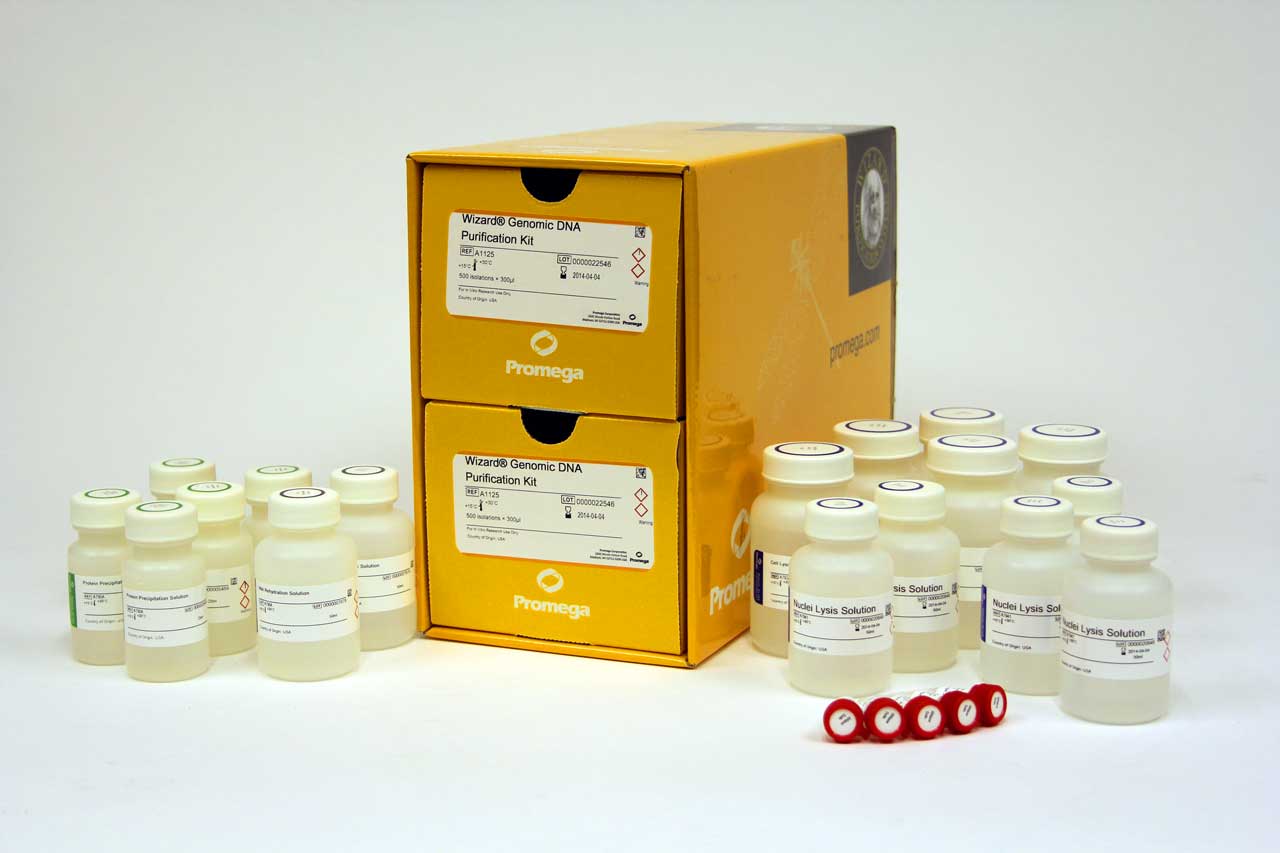
What's in the box?
| Item | Part # | Size | Available Separately |
|---|---|---|---|
|
Cell Lysis Solution |
A793A | 1 × 100ml | View Product |
|
Nuclei Lysis Solution |
A7941 | 1 × 50ml | View Product |
|
Protein Precipitation Solution |
A795A | 1 × 25ml | View Product |
|
DNA Rehydration Solution |
A796A | 1 × 50ml | View Product |
|
RNase A Solution |
A797A | 1 × 250μl | View Product |
SDS
Search for SDSCertificate of Analysis
Use Restrictions
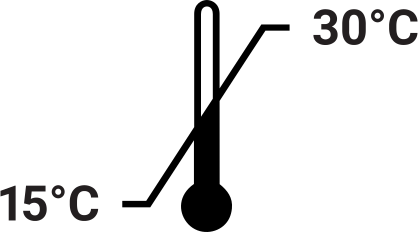
For Research Use Only. Not for Use in Diagnostic Procedures.Storage Conditions
What's in the box?
| Item | Part # | Size | Available Separately |
|---|---|---|---|
|
Cell Lysis Solution |
A793A | 5 × 100ml | View Product |
|
Nuclei Lysis Solution |
A7941 | 5 × 50ml | View Product |
|
Protein Precipitation Solution |
A795A | 5 × 25ml | View Product |
|
DNA Rehydration Solution |
A796A | 2 × 50ml | View Product |
|
RNase A Solution |
A797A | 5 × 250μl | View Product |
SDS
Search for SDSCertificate of Analysis
Use Restrictions
For Research Use Only. Not for Use in Diagnostic Procedures.Storage Conditions
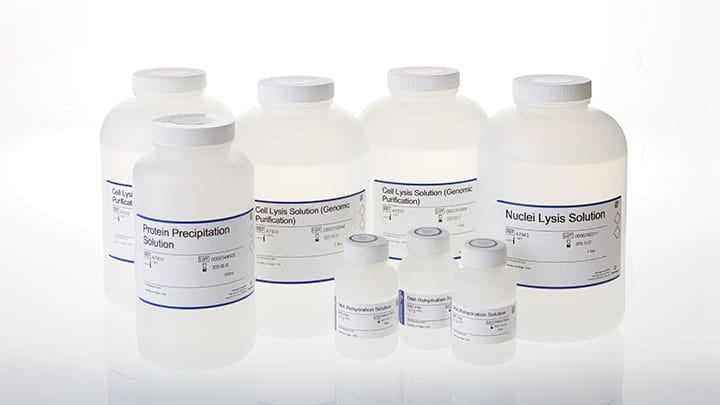
What's in the box?
| Item | Part # | Size |
|---|---|---|
|
Cell Lysis Solution (Genomic Purification) |
A7933 | 3 × 1 liter |
|
Nuclei Lysis Solution |
A7943 | 1 × 1 liter |
|
Protein Precipitation Solution |
A7953 | 1 × 350ml |
|
DNA Rehydration Solution |
A7963 | 3 × 50ml |
SDS
Search for SDSCertificate of Analysis
Use Restrictions
For Research Use Only. Not for Use in Diagnostic Procedures.Storage Conditions
Related Products
Similar Products
ReliaPrep™ Large Volume HT gDNA Isolation System
DNA isolation from 1–10ml blood samples. Liquid-handler compatible.
A2751
ReliaPrep™ Blood gDNA Miniprep System
Fast, manual purification of high-quality DNA from up to 200μl blood or body fluids.
A5081, A5082
ReliaPrep™ gDNA Tissue Miniprep System
Manual DNA extraction from 25mg tissue, 1 buccal swab or 1cm mouse tail.
A2051, A2052
SV Total RNA Isolation System
Simple spin or vacuum-based method to extract total RNA from tissues, cultured cells and white blood cells.
Z3101, Z3100, Z3105
Frequently Used With
Molecular Biology Lab Guide
A resource designed for scientists just embarking on their career, focusing on fundamental technologies and techniques.
GEN1978
pGEM®-T Vector Systems
T-vector for simplified cloning of PCR products.
A3600, A3610
GoTaq® G2 Master Mixes
Second-generation, high-performance GoTaq® G2 DNA Polymerase in a ready-to-use master mix.
M7822, M7823, M7832, M7833
QuantiFluor® ONE dsDNA System
"Add-and-read" quantitation of double-stranded DNA. Includes DNA-binding dye, lambda DNA and buffer.
E4871, E4870
Quantus™ Fluorometer and NGS Starter Package
Two fluorescence channels for nucleic acid and protein quantitation. Available in bundle for NGS applications.
E6150, E5150
Nuclei Lysis Solution
Component of the Wizard®, Wizard® SV and Wizard® SV 96 Genomic DNA Purification Systems available for separate purchase.
A7941, A7943